
Seth Winery

(Description)

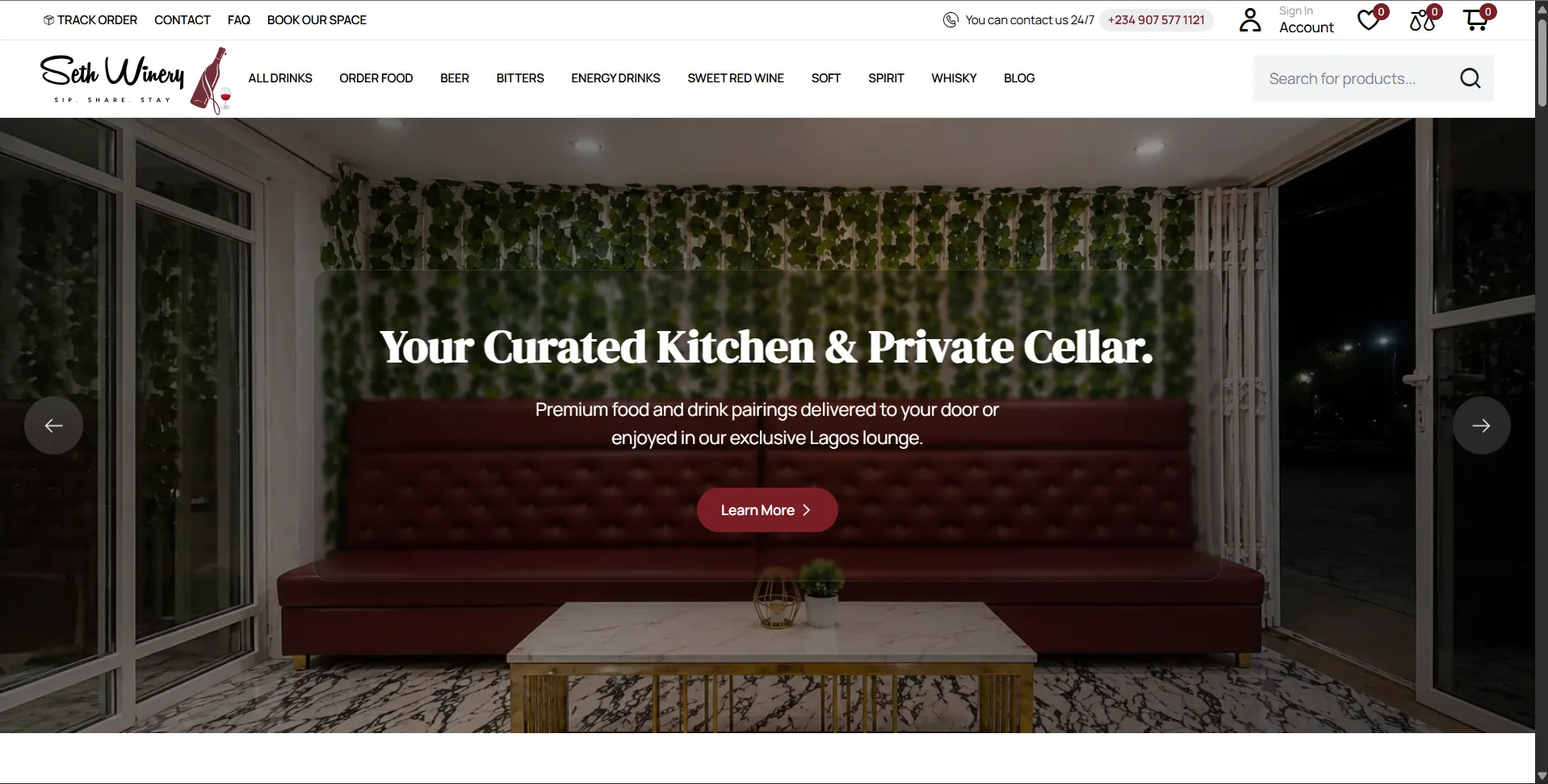
Seth Winery & Foods is a Lagos-based e-commerce and instant food platform featuring a Chowdeck-style ordering UI alongside a multi-tier logistics backend. It integrates Terminal Africa and Shipbubble for regional shipping, paired with a custom internal web app for local dispatch management, real-time rider tracking, and automated customer updates.
Challenges & Objectives

/ Project Overview

Seth Winery & Foods (sethwinery.com.ng) is a hybrid e-commerce and fast-casual food delivery platform based in Lagos, Nigeria. The platform combines a boutique online wine cellar with an instant, high-converting online restaurant storefront.


To give customers a seamless ordering experience similar to modern food delivery apps like Chowdeck, the site features a custom single-page food menu UI with tabbed categories, instant add-to-cart drawers, and customizable meal options—integrated alongside a standard WooCommerce catalog for premium wines, spirits, and beers.


To solve complex urban logistics, the architecture links external 3rd-party logistics APIs (Terminal Africa and Shipbubble) for nationwide/regional shipping with an in-house custom logistics web app for hyper-local deliveries. This internal app manages in-house dispatch riders, providing customers with real-time tracking and delivery updates.

/ Challenges

  • Deliver a Dual-Experience Storefront: Seamlessly bridge standard e-commerce browsing for alcoholic beverages with a fast, app-like food ordering interface (Chowdeck-style UI).
  • Streamline Local & Regional Fulfillment: Automate multi-carrier logistics routing via Terminal Africa and Shipbubble while maintaining full control over hyper-local, direct-dispatch deliveries.
  • Build a Custom Internal Logistics App: Create an internal dispatch management web tool to assign orders, track rider positions in real-time, and automate order status transitions.
  • Enhance Customer Transparency: Provide automated order updates and real-time live tracking links to minimize delivery-related customer support queries.
  • Optimize Mobile-First Conversion: Ensure the dynamic menu, drawer-based cart, and checkout flow remain lightweight, responsive, and intuitive on mobile devices.

/ Objectives

  • Dual-UX Architectural Integration
    Issue: Standard e-commerce catalog templates for long-tail products (wines/spirits) create friction when applied to quick food ordering where customers expect instant category toggles, sticky carts, and add-on selection modals without page reloads.
  • Solution: Engineered a custom front-end layout for the /order-food/ section using dynamic JavaScript components, slide-out drawer carts, and category tab switching that interacts directly with the WooCommerce cart engine behind the scenes.
  • Multi-Tier Logistics Orchestration
    Issue: Reliance on 3rd-party fulfillment platforms alone often leads to high costs or delivery delays for immediate local orders (e.g., hot meals), while managing direct riders manually causes operational bottlenecks.
  • Solution: Divided fulfillment into two pipelines: integrating Terminal Africa & Shipbubble for automated regional/interstate shipping rates, while routing local/instant orders into a purpose-built internal logistics application.
  • Real-Time Dispatch Tracking & Status Sync
    Issue: Building a live rider tracking mechanism without causing heavy database overhead or sync latency between the main e-commerce store and the dispatch app.
  • Solution: Architected a lightweight custom logistics app that syncs order statuses bi-directionally via webhooks/REST endpoints, giving dispatch riders simple status toggles and delivering live tracking links directly to end-users.
  • Performance & Touch Device Optimization
    Issue: E-commerce themes with heavy visuals and interactive widgets often suffer performance drops on mobile networks, hurting conversion rates.
  • Solution: Optimized dynamic image assets, lazy-loaded off-screen elements, and streamlined script loading to maintain smooth 60fps interaction on touch devices.